


Skincare


Makeup


Haircare


-
Estelin - Ultra Light Hydrating Invisible Sunscreen Spf 50 Pa+++ 50G
Regular price Rs.1,239.00Regular priceUnit price perRs.1,239.00Sale price Rs.1,239.00 -
Estelin - All In One Multi Defense Tinted Sunscreen Spf 100 Pa+++ 100G
Regular price Rs.1,529.00Regular priceUnit price perRs.1,529.00Sale price Rs.1,529.00 -
Jenpharm Spectra Block Max Tinted Super Sunblock Cream 40G
Regular price Rs.998.00Regular priceUnit price perRs.998.00Sale price Rs.998.00 -
Neophar - Neobrella Sunblock Cream SPF60 PA+++
Regular price Rs.837.00Regular priceUnit price perRs.930.00Sale price Rs.837.00Sale -
Jenpharm Spectra Matt Sebum Control Sunblock Spf40 30G
Regular price Rs.1,998.00Regular priceUnit price perRs.1,998.00Sale price Rs.1,998.00 -
Saeed Ghani - Sunblock SPF 60 with Vitamin C
Regular price Rs.459.00Regular priceUnit price perRs.540.00Sale price Rs.459.00Sale -
Cosrx - Aloe Soothing Sun Cream Spf 50+ Pa+++ 50Ml
Regular price Rs.3,789.00Regular priceUnit price perRs.4,889.00Sale price Rs.3,789.00Sale -
Physiogel Red Smoothing Ai Sensitive Uv Sunscreen Spf 50 40Ml
Regular price Rs.3,183.00Regular priceUnit price perRs.3,350.00Sale price Rs.3,183.00Sold out -
Herbion Natural Sun Block 50 SPF
Regular price Rs.600.00Regular priceUnit price perRs.600.00Sale price Rs.600.00 -
Neutrogena Ultra Sheer Dry Touch Sunscreen SPF70 88ML
Regular price Rs.4,499.00Regular priceUnit price perRs.5,999.00Sale price Rs.4,499.00Sale -
Oneskin - Glow on - Brightening & Hydrating SPF 60++ Cream
Regular price Rs.590.00Regular priceUnit price perRs.590.00Sale price Rs.590.00 -
L'Oreal Skin Expert - Glycolic Bright UV Fluid SPF 50+
Regular price Rs.3,600.00Regular priceUnit price perRs.4,500.00Sale price Rs.3,600.00Sale -
Neutrogena Clear Face Breakout Free Sunscreen Spf 50 88Ml
Regular price Rs.4,759.00Regular priceUnit price perRs.4,899.00Sale price Rs.4,759.00Sold out -
Disaar - Refreshing Sunblock Very High Protection Uvb + Uva Spf 60-90++ 80Ml
Regular price Rs.839.00Regular priceUnit price perRs.929.00Sale price Rs.839.00Sale -
AccuFix - Invisible Shield With Centella SPF 50 PA++++
Regular price Rs.2,495.00Regular priceUnit price perRs.2,495.00Sale price Rs.2,495.00 -
Rivaj - Bright Ray Vitamin C Sunblock SPF 60 PA++
Regular price From Rs.285.00Regular priceUnit price perRs.300.00Sale price From Rs.285.00Sale -
AccuFix - Daily Defence Sunscreen SPF 30+ PA+++
Regular price Rs.1,395.00Regular priceUnit price perRs.1,395.00Sale price Rs.1,395.00 -
Disaar - Vitamin C Refreshing Whitening Sunscreen Spf 50 Pa+++ 50G
Regular price Rs.839.00Regular priceUnit price perRs.929.00Sale price Rs.839.00Sold out -
Dr Rashel - Brightening & Anti-aging Sunscreen SPF50 PA+++ 50g
Regular price Rs.1,289.00Regular priceUnit price perRs.1,289.00Sale price Rs.1,289.00 -
Body Luxuries - Nano white sun block SPF 50 - 75ml
Regular price Rs.743.00Regular priceUnit price perRs.825.00Sale price Rs.743.00Sale -
Neophar - Neobrella Tinted Sunscreen Cream SPF100 PA+++ - 40g
Regular price Rs.1,168.00Regular priceUnit price perRs.1,298.00Sale price Rs.1,168.00Sold out -
Body Luxuries - Kids sunscreen cream SPF 50+ 75ml
Regular price Rs.675.00Regular priceUnit price perRs.750.00Sale price Rs.675.00Sale -
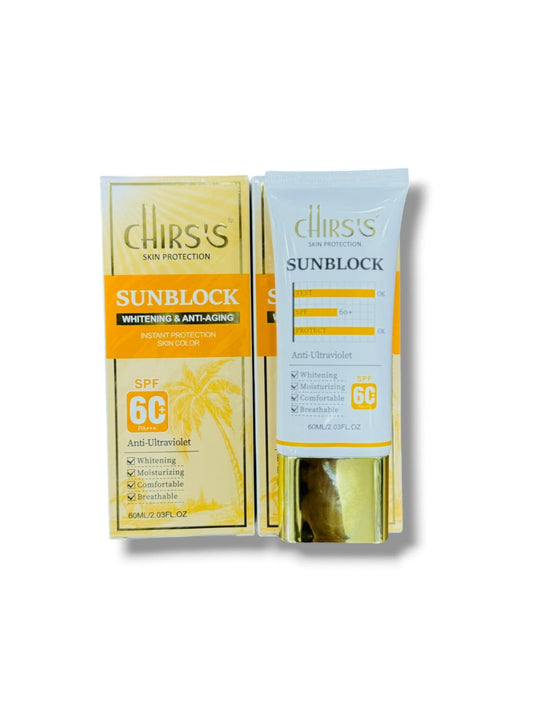
Chirs'S Sunblock Whitening & Anti-Aging Spf 60 Pa+ 60Ml
Regular price Rs.949.00Regular priceUnit price perRs.949.00Sale price Rs.949.00 -
Estelin - Brightening & Anti-aging Sunscreen Lotion SPF90 PA+++ 120g
Regular price Rs.1,649.00Regular priceUnit price perRs.1,649.00Sale price Rs.1,649.00Sold out -
Rs. 10 - Estelin - Ultra Light Hydrating Invisible Sunscreen Spf 50 Pa+++ 50G - 10.10 Dhamal
Regular price Rs.10.00Regular priceUnit price perRs.1,239.00Sale price Rs.10.00Sold out -
Fused Baby Sunscreen SPF 40 PA++ (50ml)
Regular price Rs.1,349.00Regular priceUnit price perRs.1,499.00Sale price Rs.1,349.00Sold out -
Body Luxuries - DNA Sun Screen SPF 60 - 75ml
Regular price Rs.743.00Regular priceUnit price perRs.825.00Sale price Rs.743.00Sale -
Fused Screen UV60 Sunscreen (PCSIR Tested)
Regular price From Rs.1,979.00Regular priceUnit price perRs.2,199.00Sale price From Rs.1,979.00Sale -
VLCC - Moisturising Sun Block SPF 25, with PA +++
Regular price Rs.1,155.00Regular priceUnit price perRs.1,155.00Sale price Rs.1,155.00 -
Beauty Of Joseon - Purple Stay Fresh Tone-Up Sunscreen Centella + Ceramide SPF50+ PA++++ - 50ml
Regular price Rs.4,210.00Regular priceUnit price perRs.5,900.00Sale price Rs.4,210.00Sale -
Banana Boat Ultra Protect Sunscreen Lotion Spf 30 Pa+++ 90Ml
Regular price Rs.2,169.00Regular priceUnit price perRs.3,049.00Sale price Rs.2,169.00Sale -
La Roche Posay - Anthelios Hydrating Lotion Ultra Resistant SPF50+ 250Ml
Regular price Rs.13,349.00Regular priceUnit price perRs.13,349.00Sale price Rs.13,349.00Sold out




Sunblock for Sensitive Skin
Sensitive skin gets caught in a loop with sunscreen. UV exposure makes reactive skin worse — more redness, more flushing, more barrier damage — but the wrong sunscreen stings, itches or leaves the face blotchy within minutes. So people give up on it, and the underlying sensitivity gets harder to manage. Breaking that loop is mostly a matter of knowing which ingredients cause the trouble.
What usually causes the reaction
It’s rarely the UV filter itself, and almost never the SPF number.
Fragrance is the most common trigger by a wide margin, including natural fragrance and essential oils. “Unscented” is not the same as fragrance-free — it can mean a masking fragrance was added.
Alcohol denat in high concentration dries and stings compromised skin, particularly around the nose and eyes.
Certain chemical filters, notably older ones like oxybenzone, cause contact reactions in a minority of people and are a common source of eye stinging when mixed with sweat.
Preservative systems occasionally, though far less often than people assume.
Over-exfoliation. Worth naming honestly — a lot of “sensitive skin” is a damaged barrier from too many acids, and sunscreen just reveals it.
What a gentle formula looks like
Fragrance-free and dye-free as a baseline.
Mineral filters. Zinc oxide and titanium dioxide are the least likely to irritate, which is why they dominate this category.
Barrier-supporting ingredients. Panthenol, allantoin, centella, ceramides and glycerin calm as they protect.
A short ingredient list. Fewer components, fewer chances to react.
Low or no alcohol.
If your sensitivity comes with dryness — and it usually does — the best sunblock for dry skin range overlaps heavily and adds the hydration that reactive skin tends to need.
Testing before committing
Patch test properly rather than gambling on a full face. Apply a small amount along the jaw or behind the ear, twice a day for three days. Reactions to sunscreen sometimes take a second or third exposure to appear, so a single application tells you very little.
If a formula stings on application but settles within a minute and leaves no redness, that’s usually dehydration rather than allergy. If it burns, itches or leaves marks, stop.
Sensitive skin under treatment
Skin being treated for eczema, rosacea, melasma or acne is sensitised by definition. Prescription retinoids, acids and steroid creams all raise photosensitivity sharply, and skipping SPF during treatment undoes it.
For anyone in that position, the medicated sunblock in Pakistan range is built for exactly this — high protection in bases designed around compromised skin.
Living with it here
Pakistan’s climate is hard on reactive skin from both directions. Summer brings heat, sweat and high UV; winter in Lahore and the northern cities brings cold, dry air and, increasingly, smog that irritates skin as much as lungs. Sensitive skin often needs two different sunscreens across the year — a light mineral fluid for summer and a richer cream for winter.
One habit worth building: cleanse gently at night. Mineral sunscreen needs proper removal, but a harsh foaming face wash on reactive skin causes more problems than the sunscreen ever would. A mild cleanser used once, followed by moisturiser within a minute or two, keeps the barrier in better shape than any product you could add on top of it.
Everything here is fragrance-free or formulated for reactive skin. If your skin is simply normal rather than sensitive, a best sunscreen for normal skin in Pakistan option gives you more texture choice, and the full range is available if you’d rather buy sunscreen in Pakistan at Highfy.


