


Skincare


Makeup


Haircare


-
Estelin - Ultra Light Hydrating Invisible Sunscreen Spf 50 Pa+++ 50G
Regular price Rs.1,239.00Regular priceUnit price perRs.1,239.00Sale price Rs.1,239.00 -
Estelin - All In One Multi Defense Tinted Sunscreen Spf 100 Pa+++ 100G
Regular price Rs.1,529.00Regular priceUnit price perRs.1,529.00Sale price Rs.1,529.00 -
Jenpharm Spectra Block Max Tinted Super Sunblock Cream 40G
Regular price Rs.998.00Regular priceUnit price perRs.998.00Sale price Rs.998.00 -
Neophar - Neobrella Sunblock Cream SPF60 PA+++
Regular price Rs.837.00Regular priceUnit price perRs.930.00Sale price Rs.837.00Sale -
Jenpharm Spectra Matt Sebum Control Sunblock Spf40 30G
Regular price Rs.1,998.00Regular priceUnit price perRs.1,998.00Sale price Rs.1,998.00 -
Saeed Ghani - Sunblock SPF 60 with Vitamin C
Regular price Rs.459.00Regular priceUnit price perRs.540.00Sale price Rs.459.00Sale -
Cosrx - Aloe Soothing Sun Cream Spf 50+ Pa+++ 50Ml
Regular price Rs.3,789.00Regular priceUnit price perRs.4,889.00Sale price Rs.3,789.00Sale -
Physiogel Red Smoothing Ai Sensitive Uv Sunscreen Spf 50 40Ml
Regular price Rs.3,183.00Regular priceUnit price perRs.3,350.00Sale price Rs.3,183.00Sold out -
Herbion Natural Sun Block 50 SPF
Regular price Rs.600.00Regular priceUnit price perRs.600.00Sale price Rs.600.00 -
Neutrogena Ultra Sheer Dry Touch Sunscreen SPF70 88ML
Regular price Rs.4,499.00Regular priceUnit price perRs.5,999.00Sale price Rs.4,499.00Sale -
Oneskin - Glow on - Brightening & Hydrating SPF 60++ Cream
Regular price Rs.590.00Regular priceUnit price perRs.590.00Sale price Rs.590.00 -
L'Oreal Skin Expert - Glycolic Bright UV Fluid SPF 50+
Regular price Rs.3,600.00Regular priceUnit price perRs.4,500.00Sale price Rs.3,600.00Sale -
Neutrogena Clear Face Breakout Free Sunscreen Spf 50 88Ml
Regular price Rs.4,759.00Regular priceUnit price perRs.4,899.00Sale price Rs.4,759.00Sold out -
Disaar - Refreshing Sunblock Very High Protection Uvb + Uva Spf 60-90++ 80Ml
Regular price Rs.839.00Regular priceUnit price perRs.929.00Sale price Rs.839.00Sale -
AccuFix - Invisible Shield With Centella SPF 50 PA++++
Regular price Rs.2,495.00Regular priceUnit price perRs.2,495.00Sale price Rs.2,495.00 -
Rivaj - Bright Ray Vitamin C Sunblock SPF 60 PA++
Regular price From Rs.285.00Regular priceUnit price perRs.300.00Sale price From Rs.285.00Sale -
AccuFix - Daily Defence Sunscreen SPF 30+ PA+++
Regular price Rs.1,395.00Regular priceUnit price perRs.1,395.00Sale price Rs.1,395.00 -
Disaar - Vitamin C Refreshing Whitening Sunscreen Spf 50 Pa+++ 50G
Regular price Rs.839.00Regular priceUnit price perRs.929.00Sale price Rs.839.00Sold out -
Dr Rashel - Brightening & Anti-aging Sunscreen SPF50 PA+++ 50g
Regular price Rs.1,289.00Regular priceUnit price perRs.1,289.00Sale price Rs.1,289.00 -
Body Luxuries - Nano white sun block SPF 50 - 75ml
Regular price Rs.743.00Regular priceUnit price perRs.825.00Sale price Rs.743.00Sale -
Neophar - Neobrella Tinted Sunscreen Cream SPF100 PA+++ - 40g
Regular price Rs.1,168.00Regular priceUnit price perRs.1,298.00Sale price Rs.1,168.00Sold out -
Body Luxuries - Kids sunscreen cream SPF 50+ 75ml
Regular price Rs.675.00Regular priceUnit price perRs.750.00Sale price Rs.675.00Sold out -
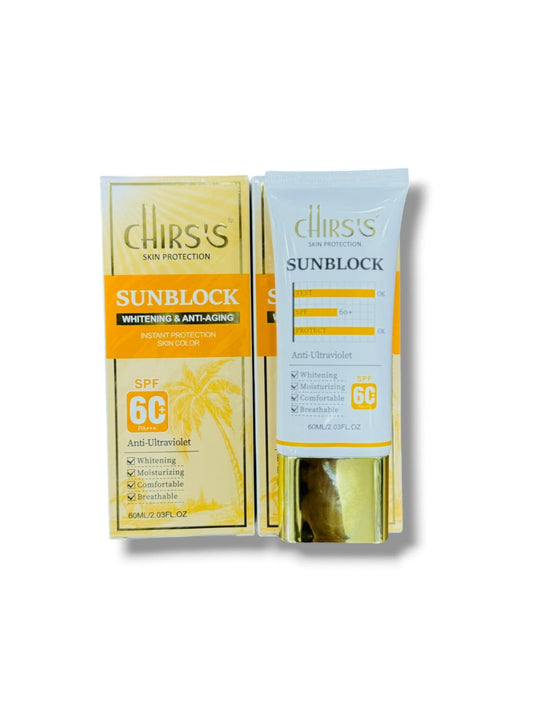
Chirs'S Sunblock Whitening & Anti-Aging Spf 60 Pa+ 60Ml
Regular price Rs.949.00Regular priceUnit price perRs.949.00Sale price Rs.949.00 -
Estelin - Brightening & Anti-aging Sunscreen Lotion SPF90 PA+++ 120g
Regular price Rs.1,649.00Regular priceUnit price perRs.1,649.00Sale price Rs.1,649.00Sold out -
Rs. 10 - Estelin - Ultra Light Hydrating Invisible Sunscreen Spf 50 Pa+++ 50G - 10.10 Dhamal
Regular price Rs.10.00Regular priceUnit price perRs.1,239.00Sale price Rs.10.00Sold out -
Fused Baby Sunscreen SPF 40 PA++ (50ml)
Regular price Rs.1,349.00Regular priceUnit price perRs.1,499.00Sale price Rs.1,349.00Sold out -
Body Luxuries - DNA Sun Screen SPF 60 - 75ml
Regular price Rs.743.00Regular priceUnit price perRs.825.00Sale price Rs.743.00Sold out -
Fused Screen UV60 Sunscreen (PCSIR Tested)
Regular price From Rs.1,979.00Regular priceUnit price perRs.2,199.00Sale price From Rs.1,979.00Sale -
VLCC - Moisturising Sun Block SPF 25, with PA +++
Regular price Rs.1,155.00Regular priceUnit price perRs.1,155.00Sale price Rs.1,155.00 -
Beauty Of Joseon - Purple Stay Fresh Tone-Up Sunscreen Centella + Ceramide SPF50+ PA++++ - 50ml
Regular price Rs.4,210.00Regular priceUnit price perRs.5,900.00Sale price Rs.4,210.00Sale -
Banana Boat Ultra Protect Sunscreen Lotion Spf 30 Pa+++ 90Ml
Regular price Rs.2,169.00Regular priceUnit price perRs.3,049.00Sale price Rs.2,169.00Sale -
La Roche Posay - Anthelios Hydrating Lotion Ultra Resistant SPF50+ 250Ml
Regular price Rs.13,349.00Regular priceUnit price perRs.13,349.00Sale price Rs.13,349.00Sold out




Sunblock for Dry Skin in Pakistan
The assumption that sunscreen is a summer product costs dry skin more than any other type. Winter in the northern half of the country combines low humidity, cold wind and strong midday UV at altitude, and skin that is already struggling to hold water burns and flakes faster than it does in July.
Why winter is the harder season here
Humidity collapses. From November, Islamabad, Peshawar, Lahore and the northern belt run very dry. Skin loses water to the air continuously.
Altitude raises UV. Intensity climbs roughly ten percent per thousand metres. Murree, Swat, Gilgit and Skardu deliver more UV than the temperature suggests, and snow reflects a large share of it back up at your face.
Cold wind damages the barrier. Wind plus sun is harder on dry skin than heat alone.
Heating dries indoor air further. Gas heaters in particular.
The result is a season where people stop wearing sunscreen precisely when their skin needs it most.
What to use from November to February
A cream base with glycerin, panthenol and ceramides. Squalane or a plant oil for surface smoothing. SPF 50 with PA+++ or PA++++.
Avoid anything described as matte, oil-control or quick-dry. Those formulas are engineered to absorb oil, which is the one thing your skin does not have to spare.
If you are travelling north, add a balm for the cheeks and nose, where cold and reflected UV combine.
What to use from April to September
A lighter version of the same idea. A milky fluid or light lotion rather than a rich cream, still with humectants but less occlusion.
Dry skin in a Karachi summer still needs hydration, just not weight. Running your winter cream through July is uncomfortable and unnecessary.
Application that does not cause flaking
Most flaking blamed on sunscreen is a sequencing problem.
Apply to slightly damp skin, immediately after moisturiser rather than twenty minutes later. Press with flat palms instead of rubbing in circles, since rubbing lifts dry skin and creates pilling. Wait a full minute before makeup.
If you are exfoliating more than twice a week, that is usually the actual cause. Scale it back before changing sunscreen.
Dry versus dehydrated
Dry skin lacks oil. Dehydrated skin lacks water, and it can happen to oily skin too.
If your skin feels tight but still gets shiny, you are dehydrated rather than dry, and a hydrating fluid will serve you better than a rich cream. The best sunscreen in Pakistan for dry skin page covers that distinction in more detail.
Travelling north
If you are heading to Murree, Naran, Hunza or Skardu, treat it as a higher-exposure trip regardless of the season. Snow reflects a substantial share of UV back upward, which means the underside of the chin, the nose and the area beneath the eyes all take a dose they never get at sea level. Pack a richer formula than you use at home, add a balm for the cheeks and lips, and reapply more often than feels necessary. Cold air makes it easy to forget that the UV load is higher than in Karachi in June.
Indoor heating deserves a mention too. Gas heaters through a northern winter dry the air considerably, and skin that seems fine outdoors can feel tight within an hour indoors.
Adjusting for the season rather than sticking with one product all year is the single most useful thing dry skin can do here.
The dry-skin hub is the best sunblock for dry skin collection, and reactive skin is covered under sunblock for sensitive skin. Or buy sunscreen in Pakistan across every texture at Highfy.


